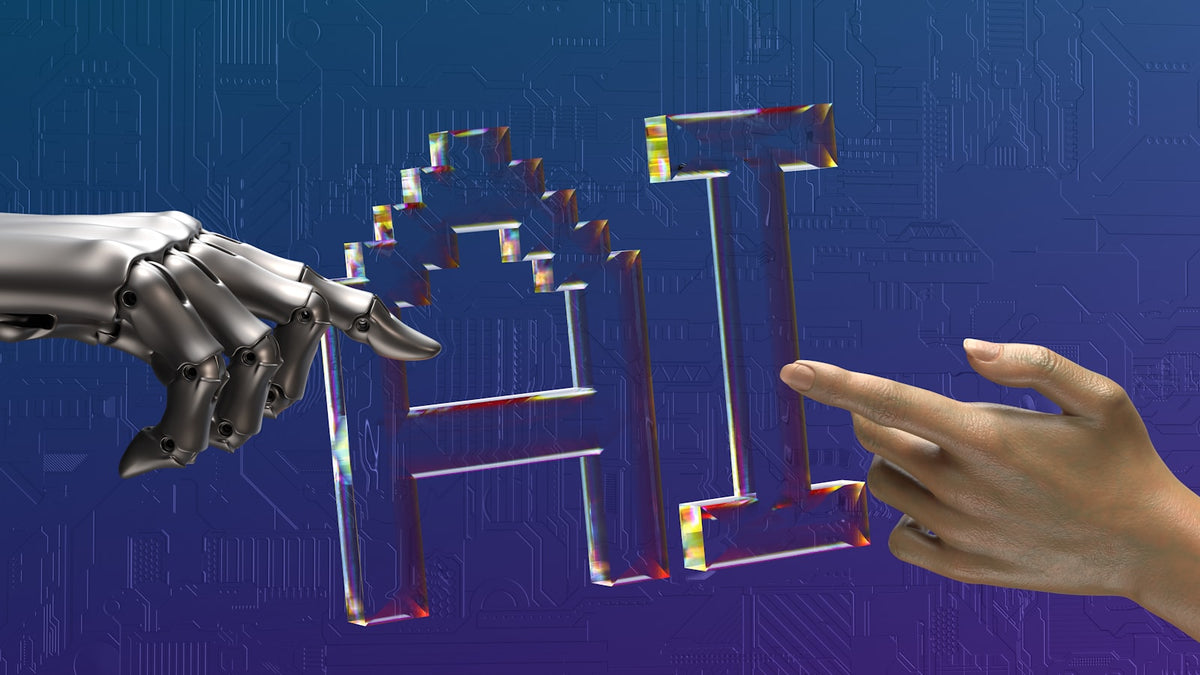

AI Is Not Coming
For Your Coffee.
But it is coming for a large portion of Singapore's white-collar workforce — and most of us are not talking about the right people.
I run a specialty coffee social enterprise. We hire people rebuilding their lives — ex-offenders, ex-addicts, people society wrote off. And I want to share something about AI disruption that most business articles are missing.
A recent analysis divided the workforce into three types: Builders (creators, engineers, makers), Sellers (relationship-builders, trust-earners), and Measurers (operations, compliance, audit, middle management). The conclusion: AI is not coming for the first two. It is coming squarely for the third.
Singapore has built extraordinary infrastructure around measurer functions — compliance, audit precision, financial controls. We are world-class at them. But they are exactly what AI can now execute faster, cheaper, and without a CPF contribution. This is not a dystopia. It is a restructuring. The question is not "How do we protect these jobs?" — it is "Who do we need to become?"
At The Caffeine Experience, our model is built entirely on human trust. A Restarter — that is what we call our beneficiaries — serving coffee at The Gateway is not just executing a transaction. They are demonstrating transformation. The guest chooses us because of the human encounter, not despite it. No AI replicates that. Singapore's service sector — hospitality, healthcare, eldercare, social services — is built on exactly this depth. And yet these are the sectors we have historically underpaid. That must change.
The honest answer over a 10-year horizon: parts of your job are at risk. The better question is — what do you know that no AI does? Judgment. Relational wisdom. Cultural intelligence. The ability to lead with empathy. These are human functions. Develop them now, while you still have runway.
At The Caffeine Academy, we train people at the margins in three dimensions: Craft (build deeply), Character (sell through trust), and Calling (know your why). I believe this is the right framework for Singapore's broader workforce too. Know your trade so well you create what others cannot. Build trust so consistently that relationships become your competitive moat. Know why you do what you do — so that when the landscape shifts, you do not lose yourself.
To the marginalised and overlooked — the people TCE exists for: the skills forged through adversity — resilience, adaptability, the ability to restart — are precisely what an AI-disrupted world needs. Marginality is not destiny.
& Your Future Work
By the end of this lesson, learners will be able to:
- Explain in simple terms what AI (Artificial Intelligence) is and how it is changing jobs in Singapore
- Identify the three worker types (Builder, Seller, Measurer) and recognise where they personally fit
- Understand which roles are at higher risk of automation — and why Sellers are most protected
- Connect their TCA training (craft, character, calling) to future-proof employment
- Affirm that their lived experience is a strength, not a liability, in a changing world
This lesson is built around a real insight from global business analysis: AI is disrupting the workforce unevenly. Restarters need to understand this not with fear, but with clarity — because the human skills they are building at TCA are exactly what the future economy needs.
Note to facilitators: Present this without fear-mongering. The goal is informed confidence, not panic. Most Restarters are training for Builder and Seller roles — this is good news for them.
Ask the group: "Have you ever used Grab? Checked a menu on your phone? Used ChatGPT?" (Most will say yes.) "That's AI already in your daily life. Today we're going to talk about how AI is changing the jobs around us — and why that's actually good news for people like us."
Walk through the three types (Builder, Seller, Measurer) using the role cards above. Use Singapore examples throughout. Key message: AI is extremely good at measuring. It is not good at building with heart or selling with trust.
Draw on TCE's own story: "Matthew started The Caffeine Experience because no machine can give a Restarter a second chance. That's a human act. That's a Seller act."
Small groups (3–4 people): Each person shares — "Which type am I? Which type am I becoming through TCA?"
Facilitator anchor: Most people in the room are training to be Builders (barista craft) and Sellers (hospitality, communication). That is a strong place to be. Affirm this explicitly.
Connect the TCA curriculum framework to the workforce framework:
• Craft (Builder) — Your barista skills are irreplaceable by AI. A machine can make coffee; you create an experience.
• Character (Seller) — Your ability to make a guest feel welcomed, seen, and valued is worth more than any algorithm.
• Calling (North Star) — Knowing why you do what you do keeps you grounded when the world changes around you.
Facilitator note: Use this gently in a multi-religious setting. The core truth here — that each person was made for purposeful work — resonates across faith backgrounds. You may say: "Every major faith tradition teaches that human beings are made for meaningful work. No algorithm was 'fearfully and wonderfully made.' You were."
Ask each person to complete this sentence on a card: "One thing AI cannot take from me is ___________."
Collect the cards. Read a few aloud. Close with the TCE affirmation: "Marginality is not destiny. The world is changing. And you are ready."
- SkillsFuture: Mention that Singapore's SkillsFuture initiative exists precisely because the government knows the workforce must retrain. Restarters are ahead of this curve, not behind it.
- Yellow Ribbon / CPF: For ex-offenders specifically, the challenge of finding employment is real — but this lesson reframes AI disruption as an equaliser. Sectors like F&B, eldercare, and community services (all Seller/Builder heavy) are actively hiring and underserved.
- Hawker culture analogy: Singaporeans pay more for hawker food made by a master than a machine-produced equivalent. The human element is the premium. Restarters are learning to be that human premium.
- Multi-religious sensitivity: The Ephesians verse is optional. For non-Christian learners, the concept of purposeful work created by God may be reframed as "every tradition teaches we are made for meaningful contribution."
No formal test. Use the following to gauge understanding:
- Can the learner name and explain all three worker types in their own words?
- Can the learner identify which TCA skills connect to Builder and Seller functions?
- Did the learner complete the closing affirmation card with a specific, personal answer?
- Observation: Did the learner engage with hope rather than anxiety during group discussion?